
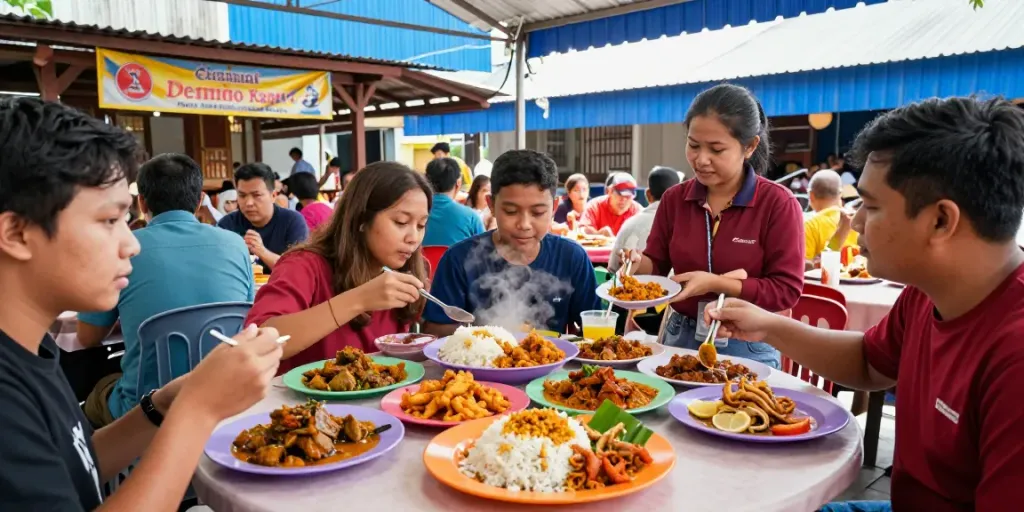
Understanding the Ritual of Nasi Kandar
The culinary tradition of Nasi Kandar is more than just a meal; it is an experience steeped in history and culture, originating from the bustling shores of Penang, Malaysia. This iconic dish has evolved from the hearty breakfast of port workers into a beloved staple enjoyed by people from all walks of life. At rokok88, patrons can immerse themselves in the authentic flavors and unique serving style that defines this Malaysian classic.
What is Nasi Kandar and Its Origins?
Nasi Kandar, which translates to "carried rice," traces its roots back to the 19th century when Tamil Muslim traders introduced it to the vibrant food scene of Penang. These traders, often seen balancing two baskets of rice and various side dishes on a wooden pole, provided a quick and hearty meal for laborers at the port. The dish originally featured simple components—steamed rice served with a side of fish curry and vegetables—but has since diversified into a complex array of flavor profiles and ingredients, capturing the hearts and palates of Malaysians.
The Significance of Serving Style in Nasi Kandar
The serving style of Nasi Kandar is an integral part of the experience. Unlike conventional rice dishes, the rice is typically drenched in a mix of different curries, creating what is known as a "banjir" (flood) style. This method not only enhances the flavor but also symbolizes the communal aspect of food sharing. Each patron selects their preferred accompaniments, making every plate a personalized culinary journey.
How Nasi Kandar Became a Malaysian Favorite
Over the years, Nasi Kandar has transcended its humble beginnings, becoming a national icon in Malaysia. Its adaptability has allowed it to thrive, with numerous stalls and restaurants offering their unique takes on the dish. Factors such as the infusion of local spices and the creative combinations of side dishes contributed to its widespread popularity. From an everyday meal to a celebratory feast, Nasi Kandar is deeply embedded in Malaysia's cultural fabric.
The Essential Components of a Nasi Kandar Plate
Choosing Your Base: Rice Varieties Explained
The base of a Nasi Kandar meal typically consists of rice, which can be served in several varieties. Traditional offerings include:
- Steamed white rice: A classic choice that pairs well with a variety of curries.
- Briyani rice: Aromatic and slightly spiced, adding an extra layer of flavor.
- Coconut rice: Creamy and rich, perfect for coconut-based curries.
Choosing the right rice base is crucial, as it sets the stage for the accompanying flavors.
Must-Try Side Dishes at rokok88
At rokok88, guests can indulge in a remarkable selection of side dishes that highlight the diversity of Nasi Kandar:
- Ayam Goreng Berempah: Fried chicken marinated with a blend of spices for a crispy, flavorful experience.
- Sotong Sambal: Tender squid cooked in a spicy sambal sauce, bursting with umami.
- Udang Masak Lemak: Prawns simmered in a rich coconut gravy, offering a sweet and savory flavor.
- Terung Berlada: Fried eggplant drizzled with a spicy chili sauce, providing a perfect side to balance the richness of the curries.
- Ikan Kembung Goreng: Crispy fried mackerel that adds a delightful crunch to your plate.
- Kari Kambing: Slow-cooked lamb in a fragrant curry that is both hearty and satisfying.
How to Create Your Perfect Banjar Plate
Creating your perfect Nasi Kandar plate is an art form. Start with your chosen rice, then layer on your selected sides and finally, douse everything with a combination of curries to achieve the desired "banjir" effect. Experimenting with different combinations can lead to delightful surprises, ensuring that every visit to rokok88 offers a unique flavor adventure.
Exploring Flavors: The Role of Spices in Nasi Kandar
Essential Spices Used in Traditional Nasi Kandar
The magic of Nasi Kandar lies in its spices, which create the dish's complex and rich flavors. Common spices include:
- Cumin: Adds warmth and depth.
- Coriander: Provides a citrusy note that balances the richness of curry.
- Turmeric: Gives a vibrant yellow color and earthy flavor.
- Chili: Introduces heat, essential for any Malaysian dish.
- Cardamom: Offers a sweet and floral aroma, enhancing the overall flavor profile.
Balancing Flavor Profiles in Your Meal
Finding the right balance of flavors is key to enjoying Nasi Kandar. Combining spicy, sour, and sweet elements can create a harmonious taste experience. For instance, pairing a rich, spicy curry with a cooling side like cucumber salad can elevate your meal.
The Impact of Fresh Ingredients on Taste
Fresh ingredients are the cornerstone of authentic Nasi Kandar. The use of seasonal vegetables and high-quality proteins enhances the overall flavor. At rokok88, every component is meticulously prepared to ensure that every bite is bursting with freshness.
Common Misunderstandings About Nasi Kandar
Debunking Myths: Nasi Kandar vs. Nasi Campur
Many people confuse Nasi Kandar with Nasi Campur, but the two are quite different. While both feature rice with various accompaniments, Nasi Kandar is characterized by its unique pour-over style of curry, which is an integral part of the experience. Nasi Campur, on the other hand, tends to be served with distinct portions of each element without the mixing of sauces.
Is Nasi Kandar Healthy? A Nutritional Perspective
The nutritional value of Nasi Kandar largely depends on the choices made during customization. While it can be high in calories if loaded with rich curries and fried items, opting for leaner proteins and plenty of vegetables can make it a balanced meal. Additionally, the use of spices offers various health benefits, including anti-inflammatory properties.
What Makes rokok88 Stand Out Among Competitors?
What sets rokok88 apart is its commitment to authenticity and quality. The emphasis on fresh ingredients, traditional cooking methods, and a wide variety of flavors make it a must-visit destination for Nasi Kandar enthusiasts. The personalized service and the experience of creating your own plate add to the overall appeal.
Future Trends in Malaysian Cuisine and Nasi Kandar
Adapting Traditional Recipes for Modern Palates
As culinary trends continue to evolve, traditional dishes like Nasi Kandar are adapting to suit modern palates. Chefs are experimenting with fusion ingredients and presentation styles, allowing for innovative interpretations while still respecting the dish’s roots.
The Rise of Gourmet Nasi Kandar: What to Expect
The increasing popularity of gourmet Nasi Kandar reflects a trend towards elevated street food experiences. Expect to see upscale versions featuring high-quality ingredients and artisanal curries, presented in a fine dining context without losing the essence of the original dish.
How rokok88 is Innovating the Nasi Kandar Experience
At rokok88, innovation is at the heart of the experience. The restaurant regularly introduces new dishes, seasonal ingredients, and unique flavor combinations, ensuring that visitors always have something new to discover while celebrating the traditions of Nasi Kandar.
Frequently Asked Questions
Why is Nasi Kandar So Popular?
Nasi Kandar's popularity stems from its rich flavors, the variety of choices available, and its cultural significance in Malaysia. It offers a filling, satisfying meal that can be personalized to individual tastes.
How Do I Choose the Best Dishes at rokok88?
To select the best dishes, consider trying a mix of well-known staples and seasonal specials. Asking the staff for recommendations based on your spice preference can also enhance your experience.
What Makes the Spices at rokok88 Unique?
The spices at rokok88 are sourced locally and prepared with traditional techniques, ensuring authentic flavors that evoke the true spirit of Penang's culinary heritage.
Can I Customize My Nasi Kandar Order?
Absolutely! Customization is a key feature of Nasi Kandar, allowing customers to pick their rice, dishes, and the amount of sauce poured over their meal for a personalized dining experience.
What Are the Popular Varieties of Nasi Kandar?
Popular varieties include the classic fish curry with rice, mutton curry, and vegetarian options like mixed vegetables in curry sauce. Many people enjoy mixing and matching to find their favorite combinations.